
Mechanized forest harvesting: cut-to-length or full-tree, and what to measure in each
Harvester and forwarder, feller buncher and skidder: how each system works, where each one fits and what data each machine needs to deliver.
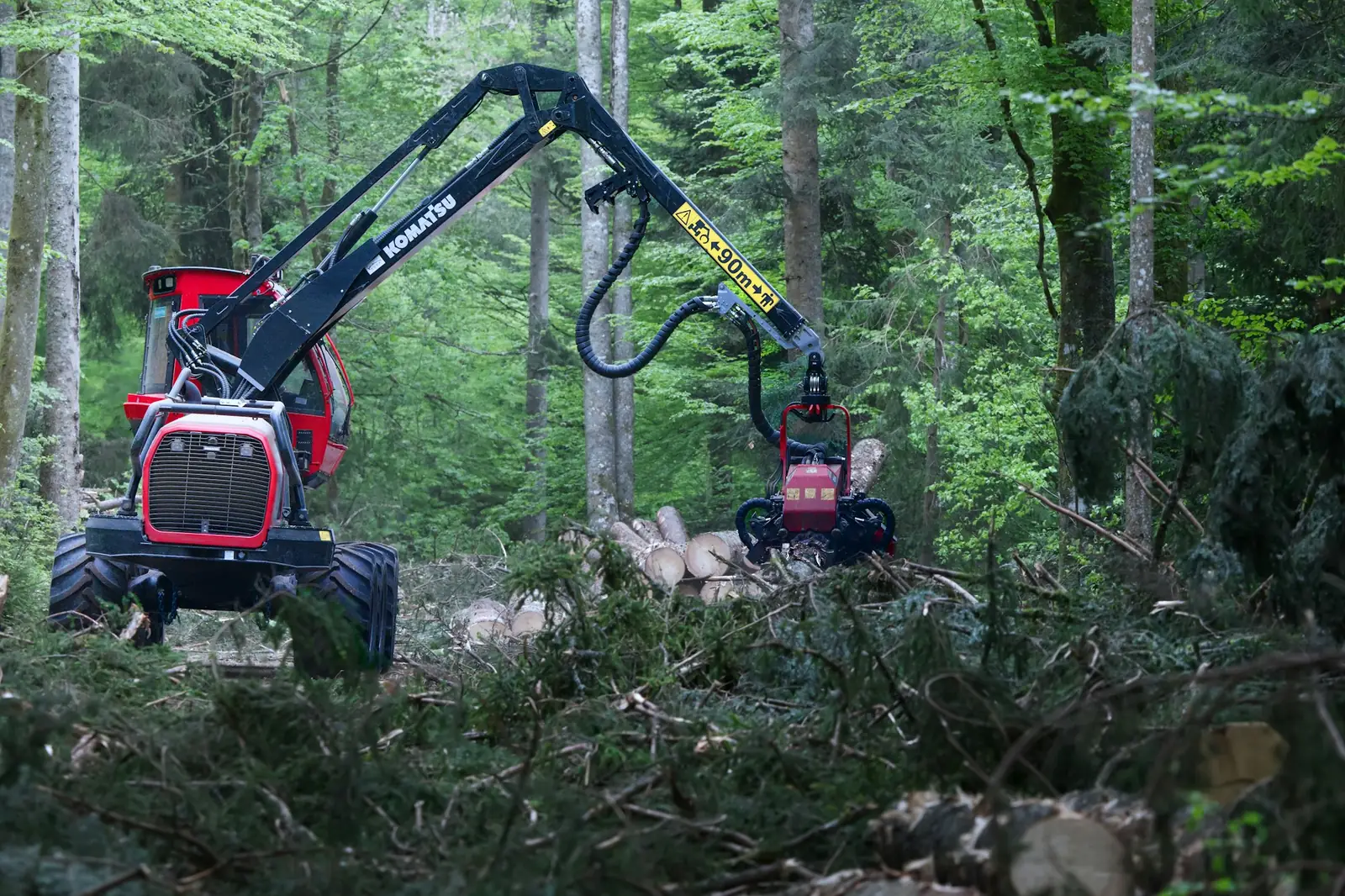
Mechanized forest harvesting revolves around two systems. They use different machines, organize the work differently and, as a result, call for different data. Understanding your own system is the first step toward measuring it properly.
Cut-to-length (CTL)
The tree is processed inside the stand, where it falls.
- The harvester fells, delimbs, debarks when the head allows it and bucks the tree into logs at the length the mill ordered, all with a single head at the tip of the boom.
- The forwarder picks up the logs and carries them, clear of the ground, to the roadside, where it builds the piles for the trucks.
In many operations it is the most common system for eucalyptus grown for pulp and charcoal, because it leaves branches and bark in the stand, compacts the soil less since the machines travel on a mat of their own slash, and delivers the wood already cut to length.
What to measure: on the harvester, engine and working hours, production (trees and volume) and stops; on the forwarder, hours, cycles and loads. The harvester’s onboard computer already records production in the StanForD standard; see how to get that data out of the woods.
Full-tree
The tree leaves the stand whole and is processed at the roadside.
- The feller buncher cuts the trees and gathers them into bunches.
- The skidder drags the bunches to the roadside.
- At the roadside, a processor (a processing head on an excavator) or a slasher saw delimbs the trees and bucks them into logs.
It delivers very high output on flat ground and in large stands, with high-production machines. On the other hand, it removes the slash from the stand and concentrates residue at the roadside.
What to measure: on the feller buncher, hours and production per bunch; on the skidder, cycles and skidding distance; on the processor, hours and volume. Production is usually measured at the roadside or in the wood yard, not on the machine that did the felling.
What changes in telemetry
| Cut-to-length | Full-tree | |
|---|---|---|
| Machines | harvester, forwarder | feller buncher, skidder, processor |
| Where production data originates | harvester onboard computer | roadside or wood yard |
| Typical bottleneck | harvester availability | synchronization between felling, skidding and processing |
| Most revealing indicator | harvester mechanical availability and efficiency | queues between the machines in the system |
In either system, three data points apply to every machine: engine hours, stops with a reason and position. From them you calculate mechanical availability and operational efficiency, the common language between harvesting, maintenance and the contract with the logging contractor.
And transport
Harvesting only ends when the wood reaches the mill or the charcoal kilns. The truck cycle (queue at loading, travel, queue at unloading) is where many operations find out that the harvesting front was waiting for the truck, or the other way around. Tracking the log trucks closes the loop.
Where IoTData fits in
Engine hours, stops and position for every machine and every truck, with each event leaving the front without cell signal over the DG satellite network, in minutes. See telemetry for forest harvesting.
Sources: standard nomenclature of forest harvesting systems (cut-to-length and full-tree); StanForD 2010, communication standard for forest machines maintained by Skogforsk.