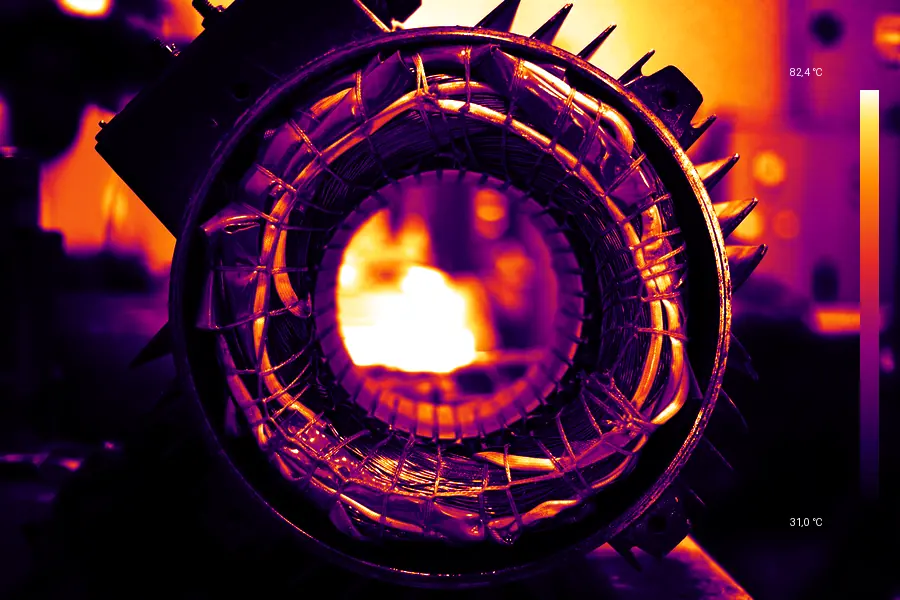
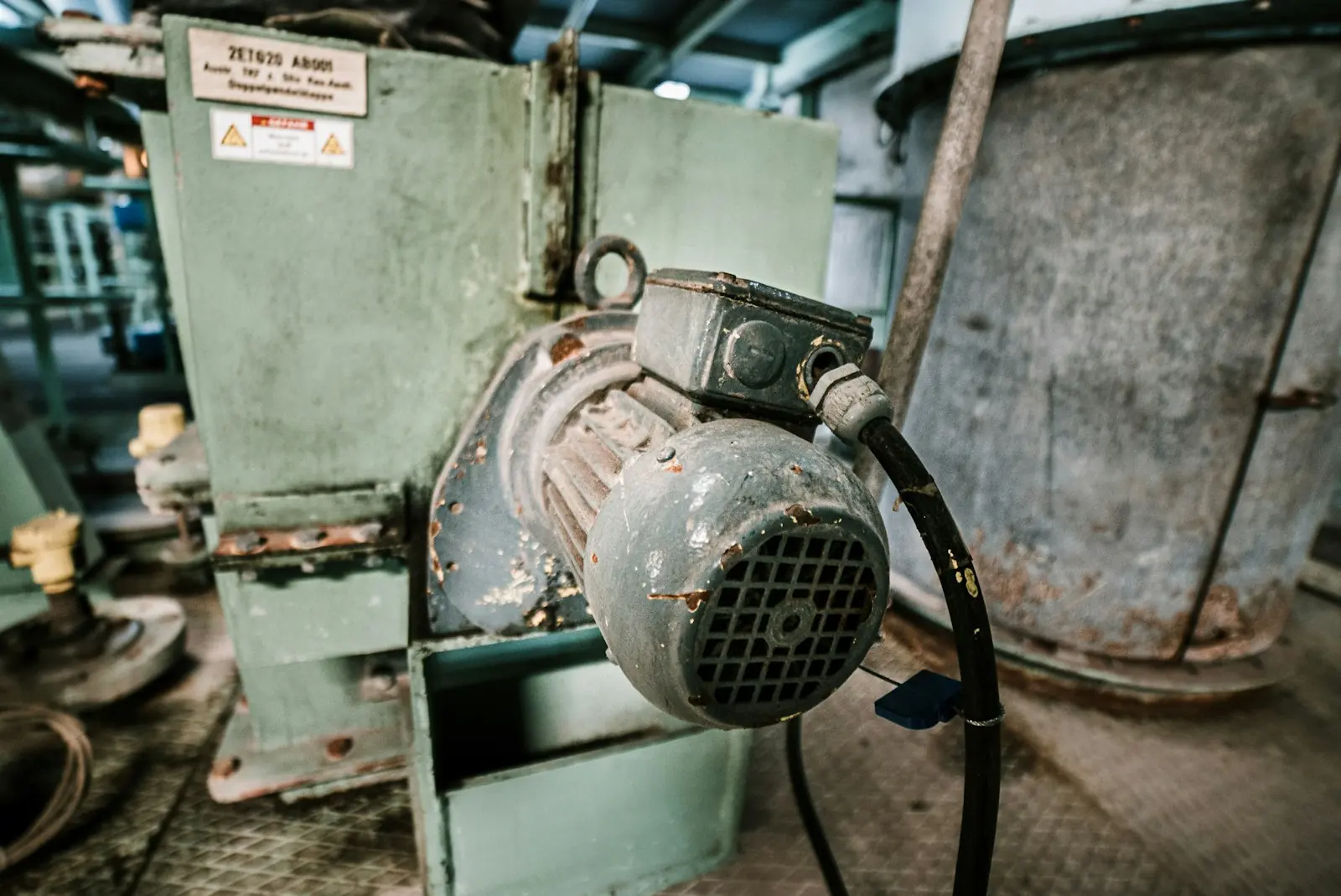
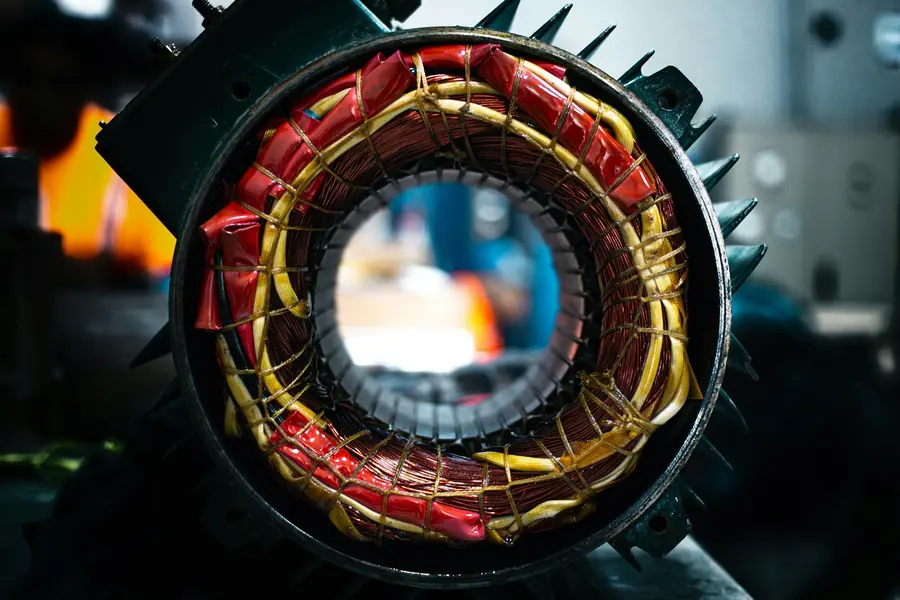
A panel heats up weeks before it burns. The camera never looks away.
A fixed thermal imaging camera, designed and built in-house, installed in front of the electrical panel, the bearing or the motor. It logs the heat of each region at regular intervals, compares it with the equipment’s own baseline and alerts you by e-mail and WhatsApp when a new hot spot appears. It complements periodic infrared inspection rather than replacing it: the camera watches the critical assets every day, and the thermographer still surveys the whole plant from time to time.
Loose connections and oxidized terminals in the panel
Overloaded phases and phase imbalance
Bearings and couplings running with friction
Motors, transformers and drives above baseline
THERMOGRAPHY◆FIXED CAMERA◆ELECTRICAL PANEL◆BEARING◆MOTOR◆HOT SPOT◆E-MAIL AND WHATSAPP ALERTS◆ISO 18434-1◆THERMOGRAPHY◆FIXED CAMERA◆ELECTRICAL PANEL◆BEARING◆MOTOR◆HOT SPOT◆E-MAIL AND WHATSAPP ALERTS◆ISO 18434-1◆
What physics and the standards say
Three facts before you aim the camera.
A thermal camera measures radiation, not temperature: the reading depends on emissivity, reflections and distance. That is why the absolute value can mislead you, and the trend of the asset itself does not.
Sensor physics
8–14 µm
The long-wave infrared band in which industrial microbolometer cameras work. In this band panels and motors emit strongly, and ordinary glass is opaque: the camera sees the surface, not what is behind it.
LWIR band of uncooled microbolometers
International standard
ISO 18434-1
The ISO standard for thermography in machine condition monitoring, with the general procedures for using it. ASTM E1934 is the reference guide for examining electrical and mechanical equipment with infrared thermography. Reflected apparent temperature, on shiny metal, remains the most common error.
ISO 18434-1:2008 · ASTM E1934
Electrical maintenance
70B
NFPA 70B, the US reference for electrical equipment maintenance, went from recommended practice to standard in its 2023 edition, with thermography among the periodic inspections of the equipment.
NFPA 70B, 2023 edition
What the camera does
Watches the critical assets every day and compares each one with itself.
The camera is ours, from firmware to platform, and talks to the same gateway as the vibration sensors. Each region marked on the image becomes a line on the dashboard.
Electrical panels and busbars
Loose connections, oxidized terminals and overloaded phases show up as heat before they turn into a trip. The camera looks at the same scene every day, from inside the panel or through an infrared inspection window.
Bearings, couplings and motors
Friction, misalignment and lack of lubricant heat up the bearing. Together with the vibration sensor, the camera helps tell a mechanical problem from an electrical one.
The asset’s own baseline
The platform keeps the history of each region and compares it with the same equipment at the same load. One phase hotter than the other two matters more than a single high reading.
Alerts on change
Notice by e-mail and WhatsApp when a region crosses its limit or drifts from its baseline, only when the level changes, without repeating at every reading.
A record for maintenance
Region, temperature and time of each event, for the work order and for the thermographer who will confirm it on site.
Same dashboard as vibration
The camera joins the IoTData platform next to the vibration sensors, the automatic lubricator and the alerts you already receive.
Dashboard exampleOne week of an electrical panel, on the platform
08:00Monday: main distribution panel 2, phase A at 41 °C, within baseline Log
14:10Wednesday: phase A 9 °C above phases B and C, at the same load Alert
14:11WhatsApp alert sent to electrical maintenance Cellular
07:30Thursday: connections re-torqued with the panel de-energized Log
11:00Thursday: phase A back in line with the other two Log
Illustrative example. The limits for each region are set with your maintenance team, based on the panel’s own history.
How deployment works
Four steps, with one person accountable from start to finish.
01
Site survey
Which panels, bearings and motors are critical, where the camera has a clear view, whether the panel has or can take an infrared inspection window, and how the network reaches it.
02
Installation
Camera mounted in front of the asset, regions marked on the image (phase, terminal, bearing) and emissivity set per material.
03
Baseline
A few weeks of logging at different loads, so the platform learns the pattern of each region before it starts alerting.
04
Operation
Alerts on, records for maintenance and a review of the limits with your team whenever the process changes.
We are straight about what the camera does. The thermal camera is ours: design, firmware, integration and platform, by Data Frontier in Brazil. It measures the surface it sees, and the absolute value depends on emissivity and reflections; that is why the platform trusts the asset’s own trend more than a single number. A fixed camera does not replace periodic infrared inspection by a thermographer, who surveys the whole plant: it watches, every day, what you cannot afford to let burn. The specification of each model comes with the proposal.
Frequently asked questions
The usual questions, answered plainly.
Is it a handheld or a fixed camera?
Fixed. It stays installed in front of the asset and logs on its own, every day. The handheld camera remains the thermographer’s tool for periodic inspection; the two complement each other.
Can the camera see inside a closed panel?
Not through the door: even ordinary glass blocks the infrared it measures. Either the camera goes inside the panel, or the panel gets an infrared inspection window, as the site survey recommends.
What are the resolution and temperature range?
They depend on the model and the asset, and come with the data sheet in the proposal. The site survey sets the distance and field of view for each point.
How does the camera connect to the platform?
Through our gateway, over the cellular network or the plant network. Where there is no network at all, the alert goes out over the DG satellite network, within minutes.
Does it replace the inspection required by our insurer or corporate?
No. Periodic infrared inspection, with a thermographer’s report, stays. The fixed camera reduces the risk between one inspection and the next on the most critical assets.
Request a proposal
Tell us which panels and machines you cannot let stop.
An engineer replies, not a bot. If you already run infrared inspections, send the latest report: it is the best map of where a fixed camera pays off.
Other areas
The same hardware and the same dashboard, in other sectors.