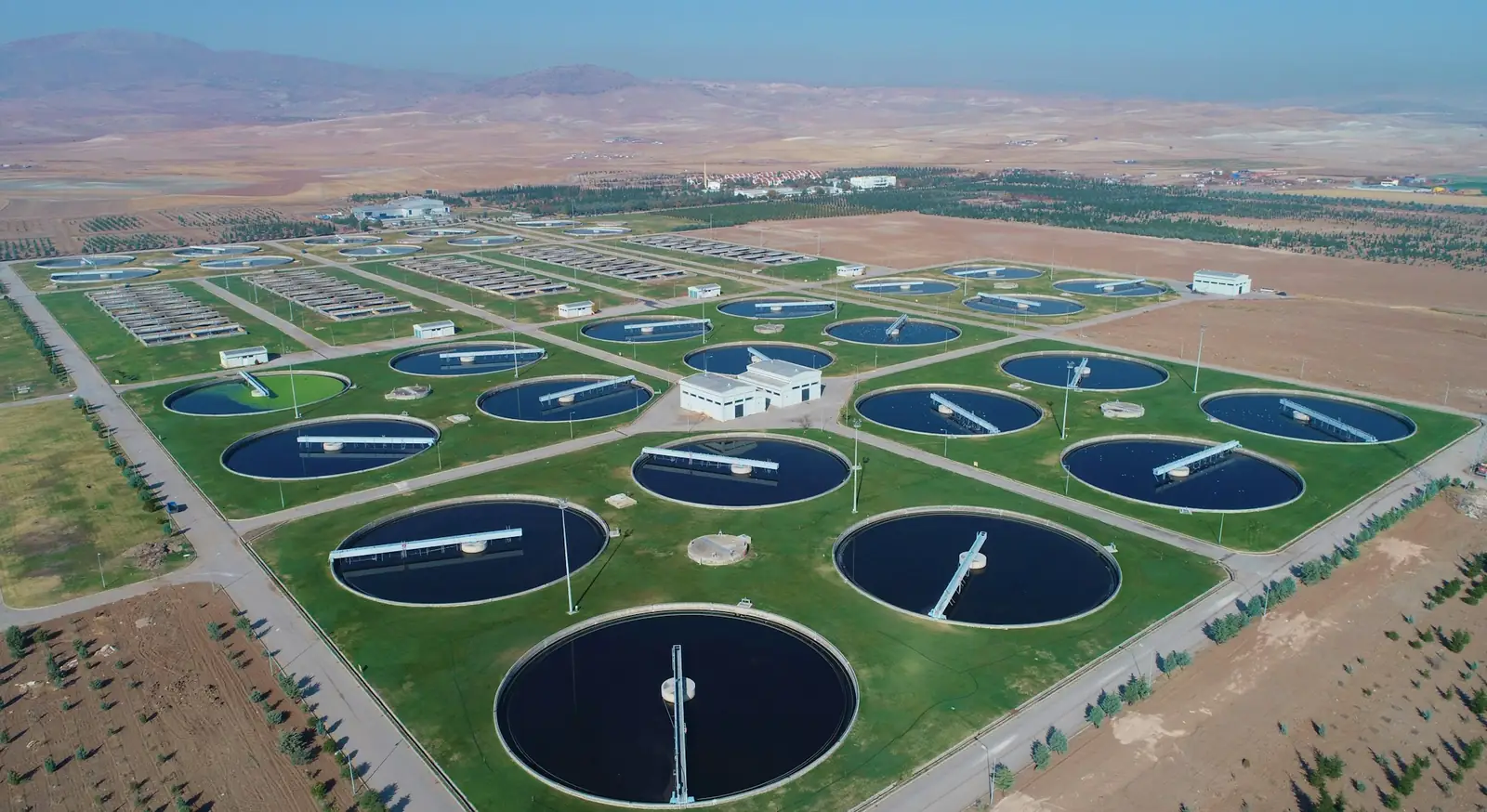
kinds of loss in the standard water balance: real losses (leaks, bursts, overflows) and apparent losses (meter under-registration, unauthorized use, data errors). Separating them starts with knowing how much went into each zone.
Three facts about water loss.
Every utility loses some of what it produces. You cannot reduce what you do not measure, and the measurement that matters is at the inlet of each district.
In the small hours, legitimate consumption is at its lowest, so most of the flow into a district is leakage. A rise in the minimum night flow is the earliest sign of a new leak, days before it surfaces.
Splitting the network into district metered areas, each with a meter at its inlet, turns one system-wide loss figure into a list of districts ranked by where the water is going.
From the well to the distribution district.
Pulse reading, level, pump hours, the network and the platform already exist. Modbus reading and the automatic balance per district are in development.
Bulk meter by pulse
Reading of the meter already in place through its pulse output: flow and volume at each district inlet, with the time of every reading.
Bulk meter by Modbus
Reading of the electromagnetic meter through its RS-485 port: flow, totalizer and the meter’s own alarms.
Reservoir level
Level of each reservoir, with a warning before it runs dry or overflows.
Well pumps and lift stations
Pump hours and starts at each well and lift station, for maintenance by usage and for the records your abstraction permit may require.
Balance per district
Each district’s inflow against metered consumption and the minimum night flow, to locate where the loss is.
Isolated wells and reservoirs
Where there is no tower, the DG satellite network, in minutes.
- 03:00North district: minimum night flow 18% above the monthly average Alert
- 03:01Warning sent to the water loss team Cellular
- 05:30Reservoir R2 at 35%; well 3 pump started Satellite
- 09:40Crew finds a leak on a 100 mm main in the North district Log
- 03:00Next night: minimum night flow back to normal Log
Illustrative example. Modbus reading and the automatic balance per district are in development.
It starts with one district.
- 01
Survey
Existing bulk meters and their outputs, reservoirs, wells and lift stations, and where there is power and signal.
- 02
Pilot district
One distribution district with its inlet metered, its reservoir and pumps on the dashboard, and the minimum night flow tracked.
- 03
Expansion
The remaining districts, with limits set by the operations and water loss teams.
- 04
Operation
Support from the people who installed it, management reports and limits reviewed over time.
We are honest about what exists today. Pulse reading, reservoir level, pump hours, the network and the platform already exist. The DG satellite network delivers in minutes, not instantly, and each message has a cost, so isolated sites send scheduled readings and alerts rather than a continuous stream. Bulk meter reading by Modbus and the automatic balance per district are in development and shown as coming soon. Public utilities buy through tenders: we bid with a technical proposal, and the pilot can be a single district.
The usual questions, answered plainly.
Do we have to replace the bulk meter?
No. We read what is already installed, through the pulse output today and, soon, through the Modbus port on electromagnetic meters.
Does it work for a small utility?
Yes, and the pilot can be a single district: one bulk meter, one reservoir and the pumps that feed it.
How does public procurement work?
Through whatever route the utility uses: a tender, a framework agreement or another procurement instrument. We respond with a technical and commercial proposal.
Does it integrate with billing and SCADA?
Through an API, yes. The scope is defined during the survey, with the utility’s IT team.
Tell us how many districts, reservoirs and wells you have.
An engineer replies, not a bot. Tell us which bulk meters exist and how they are read today.
The same hardware and the same dashboard, in other sectors.
Sources: International Water Association (IWA) standard water balance.