iotdata, by Data Frontieriot
data
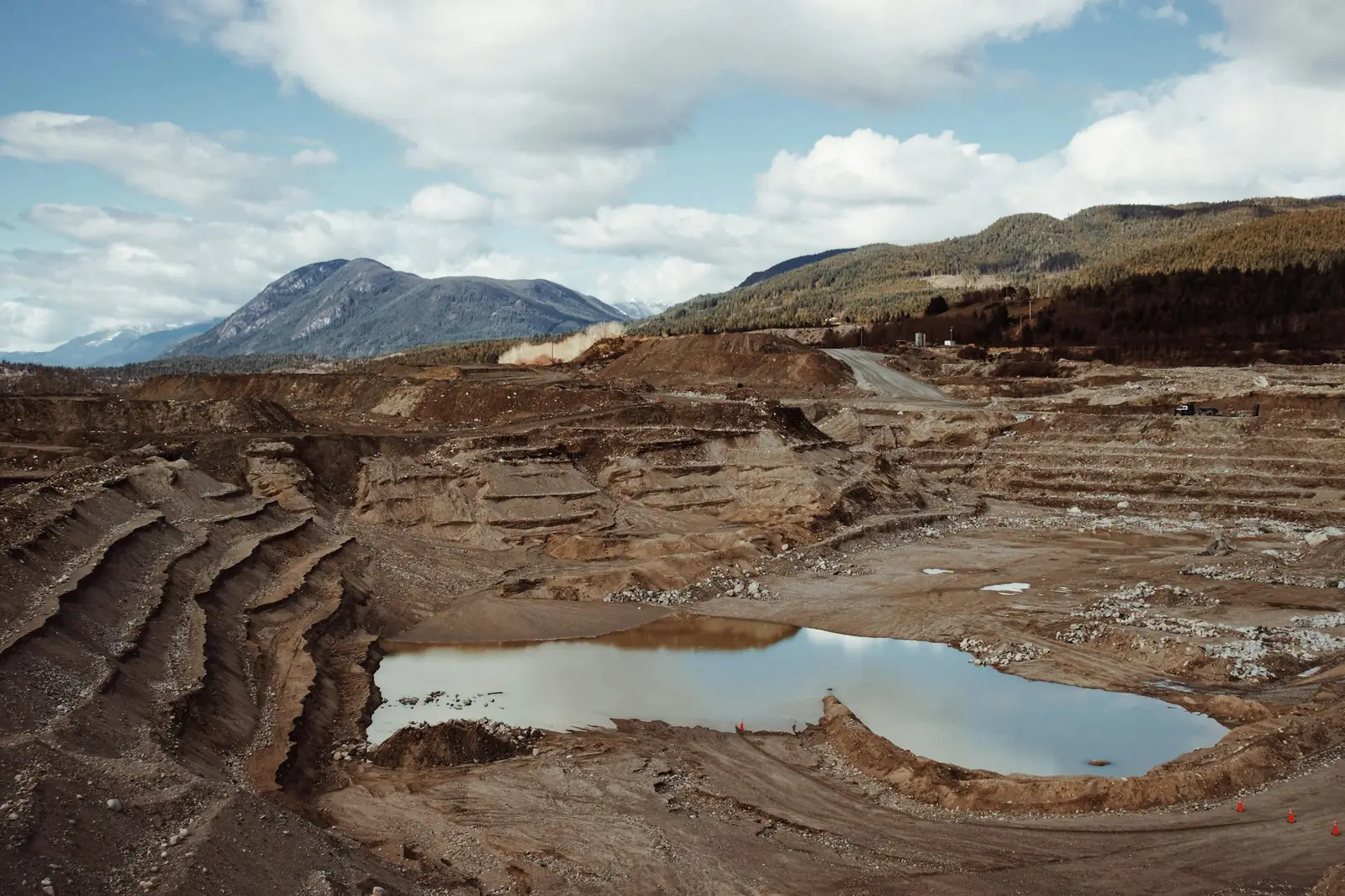
Open-pit mine with a pond at the bottom
Tailings and dams · instrumentation

The piezometer is already installed. What is missing is reading it without someone climbing the dam.

Automated reading of the vibrating wire piezometers and water level meters your dam already has, rainfall measured on the embankment itself, and a network that keeps sending data when cellular drops in the storm: LoRa radio to a gateway and the DG satellite network, in minutes, as the main path or as backup. For tailings and water dams, designed and built by Data Frontier in Brazil.

  • What reaches the platform
  • Piezometric level of each instrument
  • Water level and drain flow
  • Rainfall and weather at the dam
  • All time-stamped, even without cellular
Before you automate

Three facts before automating a dam.

The global tailings standard puts monitoring at the center of risk management. A piezometer read by hand once in a while cannot keep up with that.

Global Industry Standard on Tailings Management
2020

Published in August 2020 by ICMM, UNEP and PRI. Among its principles: design, implement and operate monitoring systems to manage risk at every phase of the facility’s life, including closure.

Global Industry Standard on Tailings Management (GISTM), ICMM, UNEP and PRI, August 2020
Manual versus automated
24/7

A piezometer read by hand gives one point per visit. Automated reading gives the whole curve, including the night of the storm, when nobody climbs the embankment and the level is most likely to move.

Reading interval and alert levels set by the engineer of record
Connectivity
Satellite

Storms take cell towers down exactly when water levels rise. LoRa radio to a gateway plus the DG satellite network keep readings arriving, in minutes, when the cellular network is out.

Network path designed site by site during the survey
What we deliver

From the instrument in the embankment to the engineer’s dashboard.

The network, the weather station and the platform already exist. The instrument readers are in development and go into a pilot with the first customer.

Coming soon

Vibrating wire piezometer

A reader with a multiplexer for the piezometers already installed: frequency and temperature of each instrument, converted with the constants from its calibration certificate. No need to replace the instrument.

Coming soon

Water level and drain flow

A field node with 4–20 mA and pulse inputs for the observation well level meter and for drain flow.

Rainfall at the dam itself

A weather station of our own make, with a rain gauge: the rain that fell on the embankment, not in the nearest town.

A network that stays up in the rain

LoRa radio to a gateway, and the DG satellite network as the main path or as backup: data arrives in minutes even when the cell tower goes down.

Coming soon

Alert levels per instrument

Each instrument with the levels set by the engineer of record, and a warning by e-mail and WhatsApp when a reading crosses a level.

History for the engineer and the reviewer

Every reading with the time it happened, and an API for the systems of the owner, the designer and the independent reviewer.

Dashboard exampleA night of heavy rain, on the platform
  1. 22:10Dam weather station: 38 mm of rain in the last hour Log
  2. 22:40PZ-07: piezometric level up 0.6 m in two hours Alert
  3. 22:41Warning sent to the on-call engineer Satellite
  4. 23:30Cellular down; readings continue over the DG satellite network Satellite
  5. 06:00PZ-07 stable; overnight readings in the history Log

Illustrative example. The piezometer reader and the alert levels per instrument are in development.

How a project works

It starts with what the dam already has.

  1. 01

    Survey

    Installed instruments, make and model, calibration certificates, which are read by hand and how often, where there is power and where there is signal.

  2. 02

    Network design

    Where the LoRa gateway goes, which path carries the data out (cellular, the DG satellite network, or both) and the solar power at each point.

  3. 03

    Pilot

    A few instruments read automatically side by side with the manual reading, until the numbers match.

  4. 04

    Operation

    The remaining instruments, the alert levels set by the engineer of record, and support from the people who installed it.

We are honest about what exists today. Today we deliver the network (LoRa, cellular and the DG satellite network, which delivers in minutes, not instantly, and charges per message, so it carries readings and alerts, not continuous streams), the weather station and the platform. The vibrating wire piezometer reader, the 4–20 mA field node and the alert levels per instrument are in development: they are marked as coming soon and go into a pilot with the first customer. We are not dam designers or reviewers: the alert level of each instrument belongs to the engineer of record.

Frequently asked questions

The usual questions, answered plainly.

Do you replace the piezometer?

No. The idea is to read the vibrating wire piezometer that is already installed automatically, using the constants from each instrument’s calibration certificate. The instrument stays.

Does it work with no cell signal at the dam?

Yes. The instruments talk to a gateway over LoRa radio, and the gateway sends the data out over cellular or over the DG satellite network, which delivers in minutes. Both paths together are the redundancy.

Does it work for water dams?

Yes. Water-retaining dams follow the dam safety rules of each country and region. The instrumentation and on-site rainfall work the same way.

When will the piezometer reader be ready?

It is in development and goes into a pilot with the first customer, on a real dam, side by side with manual reading. If you want to be that pilot, reach us through the form.

Do you audit the dam or set the alert levels?

No. That belongs to the engineer of record and the independent reviewer. Our job is to get the instrument data to the people who decide, time-stamped and without gaps.

Request a proposal

Tell us about the dam and the instruments it has.

An engineer replies, not a bot. Tell us how many piezometers, what type, and how they are read today.

Used only to reply to this request. No newsletter. Privacy policy.
Other areas

The same hardware and the same dashboard, in other sectors.

Sources: Global Industry Standard on Tailings Management (GISTM), ICMM, UNEP and PRI, August 2020.