
iotdata, by Data Frontieriot
data
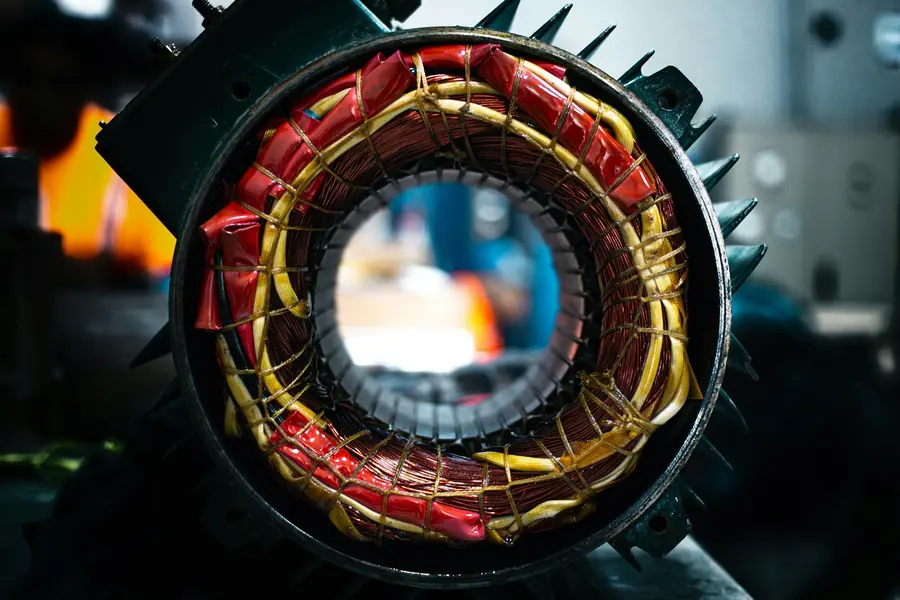
Close-up of a rotating motor component
Automatic lubrication · oil dispenser with IoT

Bearings don’t die of old age. They die of lubricant at the wrong time.

An automatic lubricator designed and built in-house: it applies the programmed dose at the right point, a little and often, without anyone climbing up to the machine. And it reports everything to the platform: the reservoir level and every shot show up on the dashboard, with an alert before it runs out. Lubrication you can prove.

  • What the dashboard shows
  • Reservoir level at each point
  • Every shot, with its time
  • An alert before the lubricant runs out
  • History for audits and for maintenance
Why automate

Three facts about lubricant and bearings.

Lubrication is the cheapest maintenance task in the plant and one of the most poorly done. Too little kills the bearing, so does too much, and whoever climbs up to lubricate is exposed to risk.

According to SKF
36%

The share of premature bearing failures that the world’s largest bearing manufacturer attributes to poor lubrication: too little, too much, the wrong lubricant or a contaminated one. It is the largest share, ahead of fatigue, mounting and contamination.

SKF, data on causes of premature bearing failure
Dosing
2 errors

Too little lubricant means metal-to-metal contact; too much means internal friction and heat, and ruins the bearing just as surely. Small, frequent doses at the right interval are exactly what a manual route struggles to keep up.

Relubrication principle of bearing manufacturers
Machine safety
LOTO

Servicing and maintenance are done with the machine stopped and its energy isolated: that is the logic of lockout/tagout, which in the US is a federal OSHA rule. A lubrication point that is high, cramped or close to moving parts is where an automatic lubricator takes people out of harm’s way.

OSHA 29 CFR 1910.147, control of hazardous energy (lockout/tagout)
What the lubricator does

The right dose, at the right point, with proof on the dashboard.

The lubricator is ours, from reservoir to firmware, and talks to the same platform as the vibration sensors and the thermal camera.

Programmed dose

Applies the amount set for each point at the interval set for it, a little and often, as the bearing manufacturer recommends.

Reservoir level

The dashboard shows how much is left at each point and when it will run out, so refills go on the route before, not after.

Every shot logged

Each dose is recorded with its time. Lubrication stops being a signature on a spreadsheet and becomes a record.

Alert before it runs out

A low reservoir or a point that has stopped dispensing becomes an e-mail and WhatsApp notice for maintenance.

Fewer people near the machine

A point that is high, cramped or near moving parts no longer needs a ladder, scaffolding or a shutdown just to be lubricated.

Alongside vibration and temperature

A bearing that got its dose and keeps heating up or vibrating has a different problem. Lubrication, vibration and thermal camera on the same dashboard show which.

Dashboard exampleOne day of a lubrication route, on the platform
  1. 06:00Point M-14 (fan bearing): dose applied Log
  2. 06:00M-14 reservoir at 22%, expected to run out in 9 days Log
  3. 06:01Refill notice sent to the lubrication route Cellular
  4. 14:30Point M-09 did not dispense at the scheduled time Alert
  5. 15:10M-09 checked: reservoir replaced and dosing resumed Log

Illustrative example. Dose, interval and alert limits are set for each point at installation.

How deployment works

Four steps, with one person accountable from start to finish.

  1. 01

    Site survey

    The plant’s lubrication points, the lubricant at each one, speed, temperature and access. That tells us where automatic lubrication pays off most.

  2. 02

    Sizing

    Dose and interval per point, based on the bearing manufacturer’s recommendation and the operating conditions.

  3. 03

    Installation

    Lubricators mounted, reservoirs filled and each point registered on the platform with its name and its route.

  4. 04

    Operation

    Level and dispensing alerts, a refill route and a review of the dose when vibration and temperature show it is needed.

We are straight about what is ours. The lubricator is designed and built by us, with firmware and platform from the same team, Data Frontier in Brazil. It applies the dose it was sized for: a wrong dose, automated, is still wrong, which is why sizing follows the bearing manufacturer’s recommendation and is reviewed when vibration or temperature call for it. The specification of each model comes with the proposal.

Frequently asked questions

The usual questions, answered plainly.

Does it work with oil and with grease?

The lubricator is sized for the lubricant at each point. Which lubricants and viscosities each model accepts is in the data sheet that comes with the proposal.

Do I need to stop the machine to install it?

For installation, yes, as with any work on the machine under your lockout/tagout procedure. After that, the lubricator works with the machine running, and nobody needs to go back to the point until the refill.

How do I know it is working?

Every shot appears on the dashboard with its time, and the reservoir level shows consumption. A point that has stopped dispensing becomes an alert.

Does it need a network in the plant?

The lubricator talks to our gateway, which connects over the cellular network or the plant network. Where there is no network, the DG satellite network delivers the events within minutes.

Can I start with just a few points?

You should. The site survey points out the critical ones, the hard-to-reach ones and those that eat the most bearings; the pilot starts there.

Request a proposal

Tell us how many lubrication points you have and where they are.

An engineer replies, not a bot. If you have your current lubrication plan, send it: it is the starting point for sizing.

Used only to reply to this request. No newsletter. Privacy policy.
Other areas

The same hardware and the same dashboard, in other sectors.

Standards and sources cited: OSHA 29 CFR 1910.147 (control of hazardous energy, lockout/tagout) · SKF, data on causes of premature bearing failure.