The classic protection criterion for buried steel: a pipe-to-soil potential equal to or more negative than −850 mV, measured against a copper/copper sulfate reference electrode. Less negative than that and corrosion comes back; too negative and the coating suffers.
Three facts about cathodic protection.
Buried steel pipe relies on a small, continuous current to keep from corroding. When it stops, nobody sees it: corrosion makes no noise.
Galvanic anodes, which corrode in place of the pipe, or impressed current, with a rectifier connected to the grid. The rectifier is the one that stops without warning: power loss, a blown fuse, a cut cable, vandalism.
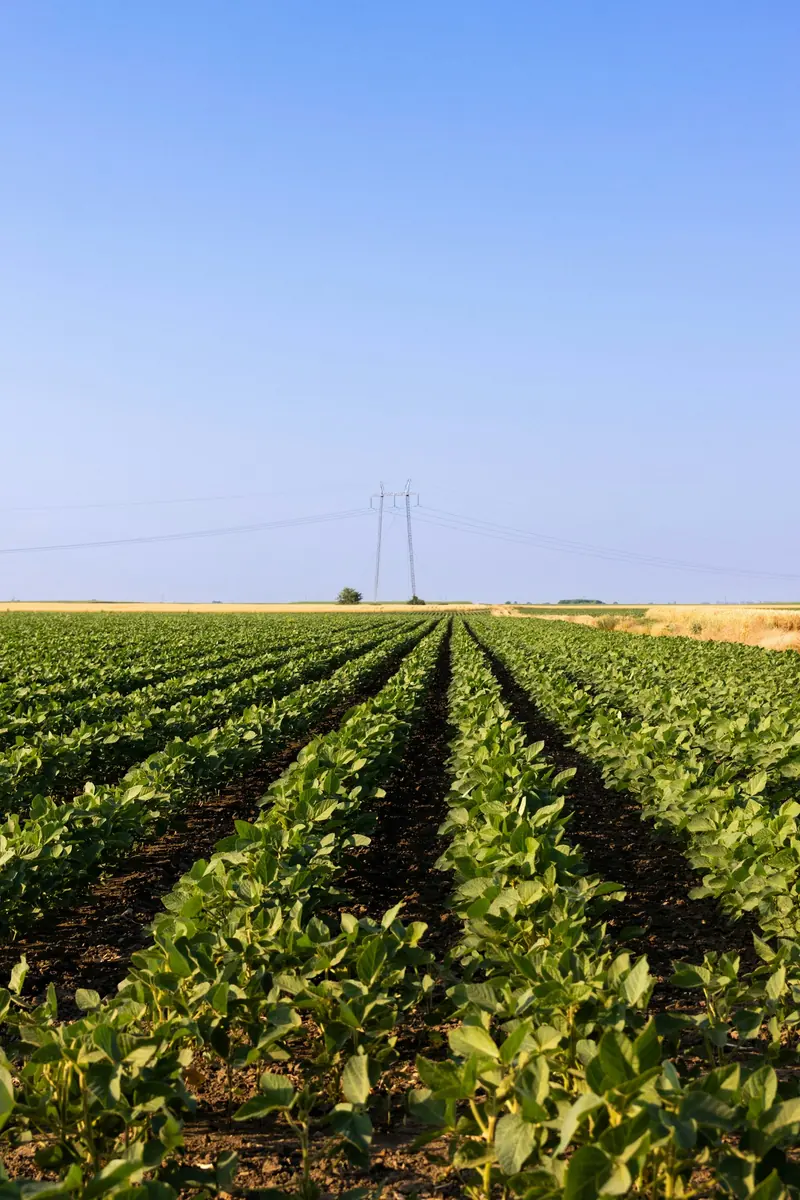
Rectifiers and test posts sit along the route: farmland, road shoulders, river crossings. Many are far from any cell tower, which is why they are still read by someone driving out with a voltmeter.
From the roadside rectifier to the integrity dashboard.
The network and the platform already exist. The cathodic protection monitor is in development and goes into a pilot with the first customer.
Rectifier
Output voltage and current through the shunt, and input power present or not. A rectifier that switches off becomes a warning in minutes, not on the next survey.
Test post
Pipe-to-soil potential against a reference electrode, on an isolated high-impedance input, battery powered, with a few readings a day.
Satellite where the pipe runs
Test posts sit on farmland and road shoulders. Over the DG satellite network the reading arrives in minutes without depending on a tower; where there is cellular, it goes over cellular.
Synchronized on/off readings
GNSS-synchronized interruption to measure the potential without the IR drop. The next phase of the monitor.
LPG tank level
Reading of the tank level gauge and pressure, so the distributor can schedule refills. Developed only together with a distributor partner.
History for integrity management
The time series of every point with the time of each reading, and an API for your pipeline integrity system.
- 06:00Test post km 12: −1,020 mV, within the criterion Satellite
- 14:32Rectifier R-03 lost input power Alert
- 14:33Warning sent to the maintenance crew Cellular
- 16:10R-03 back on; output current normal Log
- 06:00Test post km 12: −980 mV Satellite
Illustrative example. The cathodic protection monitor is in development.
It starts with the rectifier that fails most.
- 01
Survey
Rectifiers and test posts, type of system, power and signal at each site, and whether any point is in a hazardous area, which changes the equipment.
- 02
Pilot
A few rectifiers and test posts read remotely side by side with the field readings, until the numbers match.
- 03
Rollout
The remaining points, the alert limits set by your integrity team, and the report.
- 04
Operation
Support from the people who installed it, and limits reviewed whenever the system changes.
We are honest about what exists today. The cathodic protection monitor and the LPG level reader are in development and are shown as coming soon. What exists today is the network, with the DG satellite network delivering in minutes, not instantly, and each satellite message carrying a cost, so readings are scheduled a few times a day; and the platform. Equipment in a hazardous area requires specific certification, and that is assessed case by case before any proposal. The protection criterion for each section belongs to your integrity team.
The usual questions, answered plainly.
Does it work for gas pipelines, water mains and tanks?
It works for any buried or submerged steel structure under cathodic protection: gas pipelines, water mains, buried tanks. What changes is the number of points and the type of system.
Does it need hazardous-area certification?
It depends on where the equipment sits. Rectifiers are usually outside the hazardous area, but that is checked case by case during the survey, before any proposal.
When will the monitor be ready?
It is in development and goes into a pilot with the first customer, side by side with field readings. If you want to be that pilot, reach us through the form.
What about LPG tank levels?
Also in development, and it only moves forward with a committed distributor partner: they know which information actually changes refill logistics.
Tell us how many rectifiers and test posts you have.
An engineer replies, not a bot. Tell us the type of system, the pipeline length and where the signal drops.
The same hardware and the same dashboard, in other sectors.
Standards cited: ISO 15589-1 (cathodic protection of pipeline systems, Part 1: on-land pipelines).