RMS per axis
Vibration velocity on each of the three axes, the quantity ISO 10816-3 uses to classify the machine.
 iot
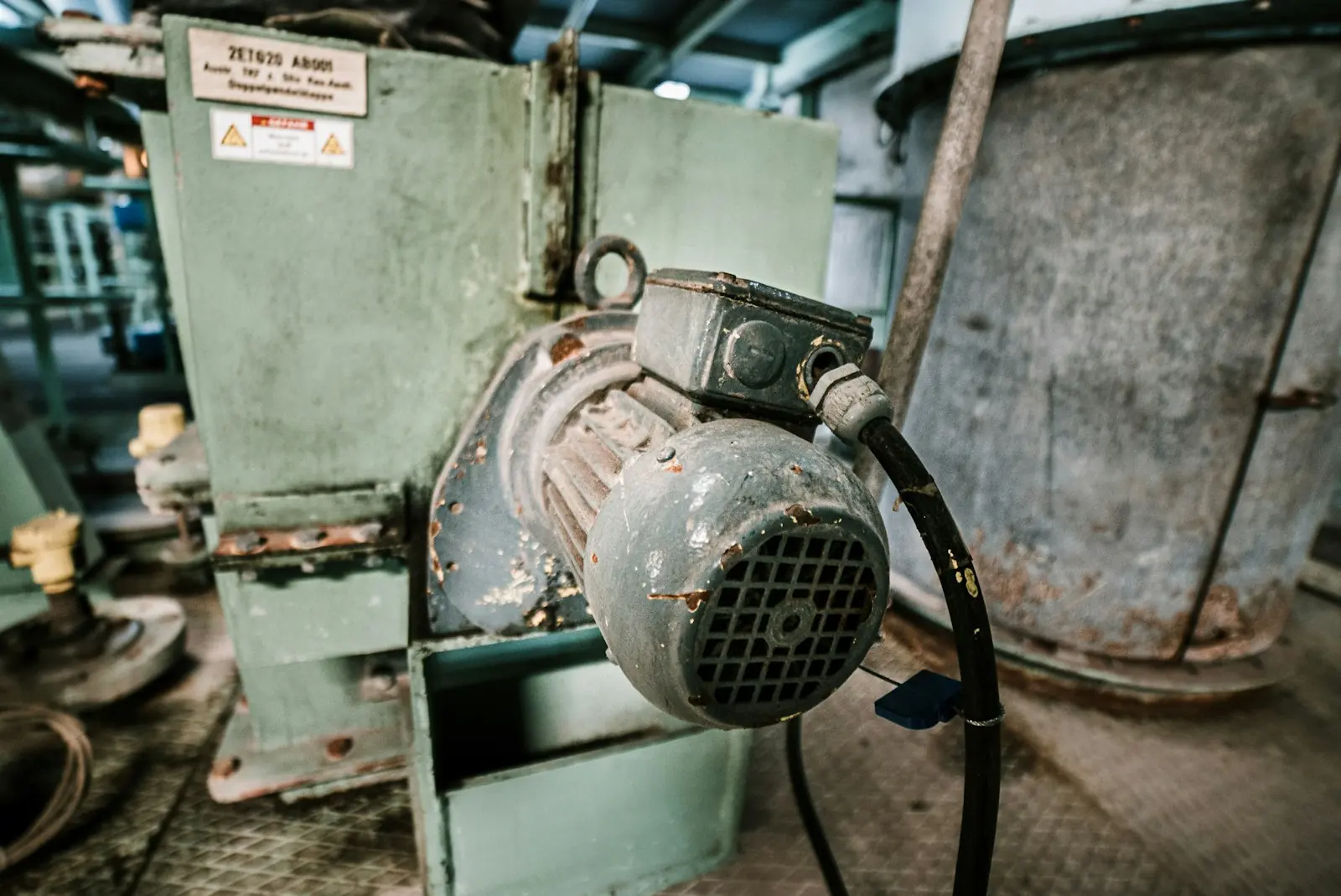
Triaxial, with built-in temperature, mounted on the housing of the motor, bearing or pump, with no cable. It sends our gateway a summary of each reading and, when you ask for it, the full spectrum. The platform compares it with the ISO 10816-3 limits or with your own, and only alerts you when the level changes. Design, firmware and manufacturing by Data Frontier, in Brazil.
The sensor goes on the housing of the motor, bearing or pump and measures vibration on three axes and temperature.
The sensor talks wirelessly to the area gateway, which sends the data over the cellular network and stores everything when the network drops.
History per axis, temperature, spectrum on demand and a comparison of each reading with that machine’s limit.
When the level changes, an e-mail and a WhatsApp message arrive with the machine, the axis, the value and the limit. When it returns to normal, that is logged too.
The summary sent with each reading is small on purpose: it saves battery and bandwidth. The detail comes when someone needs it.
Vibration velocity on each of the three axes, the quantity ISO 10816-3 uses to classify the machine.
The peak and the frequency that weighs most in each reading, which already point to unbalance, misalignment or looseness.
Requested from the dashboard when the analyst wants a closer look: the spectrum is where bearing defects show up early.
Housing temperature alongside vibration tells friction and lack of lubricant apart from a purely mechanical problem.
ISO 10816-3 classes ready on the dashboard, or your own limits, with hysteresis: a machine hovering at the limit does not trigger an alert at every reading.
Over-the-air (OTA) updates, with no visit to the sensor. The code that runs on it is ours.
| Measurement | Triaxial vibration and temperature |
|---|---|
| Sent with each reading | RMS per axis, peak and dominant frequency |
| Spectrum | Full FFT on demand, from the dashboard |
| Connection | Wireless, to the Data Frontier gateway |
| Firmware | Updated remotely (OTA) |
| Alerts | ISO 10816-3 classes or custom limits, by e-mail and WhatsApp |
| Radio | Regional radio variants available on request |
| Battery and battery life | On request |
| Frequency range | On request |
| Ingress protection | On request |
| Mounting | On request |
Where it says on request, the value depends on the model and comes in the data sheet that accompanies the proposal. We would rather do that than publish a number we cannot guarantee for your application.
Unbalance, misalignment, looseness and bearing wear, on the assets that stop production most often.
Machines that run all day, where a bearing failure takes the shaft and the coupling with it.
Where collecting with a portable data collector means a ladder, scaffolding or a shutdown, the fixed sensor measures on its own.
Designed, built and supported by the same team.
The board, the firmware, the integration and the platform are Data Frontier’s, engineered and built in Brazil. When something fails, the people who designed it are the ones who answer, with no outside supplier pointing at someone else. About the company.
No cable. The sensor is fixed to the housing, and installation follows your plant’s safety procedure; on most machines production does not need to stop.
The collector measures when someone walks by with it, once a week or once a month. The fixed sensor measures every day and alerts on change. The collector is still useful for detailed diagnosis; the sensor keeps watch.
The sensor talks to our gateway, which uses the cellular network. Without signal, the gateway stores the readings and sends them later. Where there is no cellular coverage, the DG satellite network delivers the alerts within minutes.
They are in the data sheet that comes with the proposal. The site survey checks that the model suits the machine and the environment.
An engineer replies, not a bot. Machine type, power and speed help us answer faster.