
Bulk water meters: what they are, the types and how to read them remotely
Electromagnetic, ultrasonic, Woltmann and Parshall flume: what each bulk meter measures, the pulse, current and Modbus outputs, the installation details that matter and what changes when the reading comes in on its own.
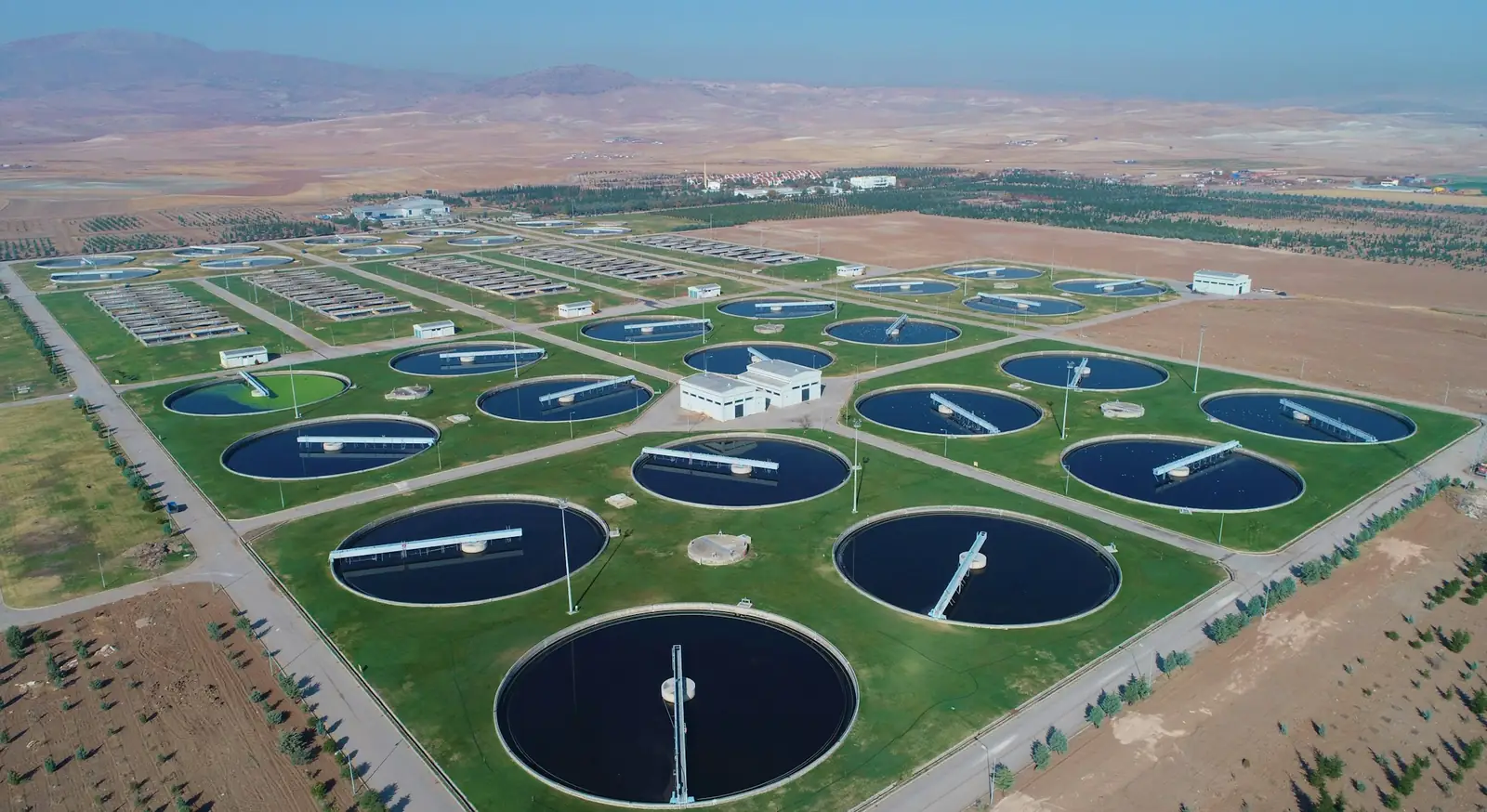
In water supply, bulk metering is the measurement of large flows: the water leaving the intake, entering and leaving the treatment plant, running through the transmission mains and entering each distribution zone. It is different from customer metering, the meters on consumer service connections. Without both, there is no way to reconcile how much water was produced with how much was delivered.
The types
Electromagnetic. Under Faraday’s law, water flowing through a magnetic field generates a voltage proportional to its velocity. There are no moving parts and no head loss, and it is accurate over a wide flow range. It needs power and proper grounding.
Ultrasonic. It measures how long sound takes to cross the water with and against the flow. It comes in inline versions and in clamp-on versions mounted on the outside of the pipe, which are handy for measurement campaigns without cutting into the line.
Mechanical (Woltmann). A turbine spins with the flow. It is cheaper, but it wears, loses accuracy over time and at low flow, and causes some head loss.
Parshall flume. In an open channel, such as at a treatment plant inlet: the flow is derived from the water depth in a flume of standardized geometry, measured by a level sensor.
The outputs
| Output | What it delivers | Typical use |
|---|---|---|
| Pulse | One pulse per fixed volume | Totalizing volume and calculating flow |
| 4-20 mA | Instantaneous flow as a current | SCADA and control |
| Modbus or another digital protocol | Flow, totalizer, alarms and diagnostics | Full remote reading |
Installation details that make the reading count
- Straight pipe run upstream and downstream, for as many pipe diameters as the manufacturer specifies.
- Full pipe: a meter at a high point with trapped air gives wrong readings.
- Grounding, for electromagnetic meters.
- Periodic verification, against a reference standard or by parallel measurement.
What changes when the reading comes in on its own
A bulk meter read by hand once a month gives you the month’s volume and nothing more. Read every few minutes, it shows:
- the flow into each zone throughout the day;
- the minimum flow in the small hours, which is the best leak indicator; see minimum night flow;
- production versus consumption, for the water loss balance.
Where IoTData comes in
Reading through the pulse output, reservoir level, pump running hours and the network that carries the data, with the DG satellite network delivering it in minutes from isolated sites, are already available. Modbus reading, with the meter’s totalizer and alarms, and the automatic balance for each zone are in development. See bulk metering.
Sources: principles of electromagnetic (Faraday’s law), transit-time ultrasonic and Parshall flume flow measurement; bulk metering practices in water supply systems.