
Over-greasing and under-greasing bearings: getting relubrication right
Why too much grease damages a bearing as much as too little, the quantity formula bearing manufacturers use, what shortens the interval, and how vibration and temperature show whether the dose is right.
In maintenance, few habits are as common as adding a little extra grease just to be safe. And few things ruin as many bearings. Too little grease and too much grease kill a bearing in different ways, and both leave traces you can measure.
What too little does
Without a sufficient film, the balls or rollers touch the raceway. Wear from metal-to-metal contact sets in: the surface turns dull, microcracks form and spalling follows. In the vibration signal, the first sign shows up at high frequency, long before the temperature rises or anyone can hear it. This is the stage where the fix is still cheap: relubricate and keep watching.
What too much does
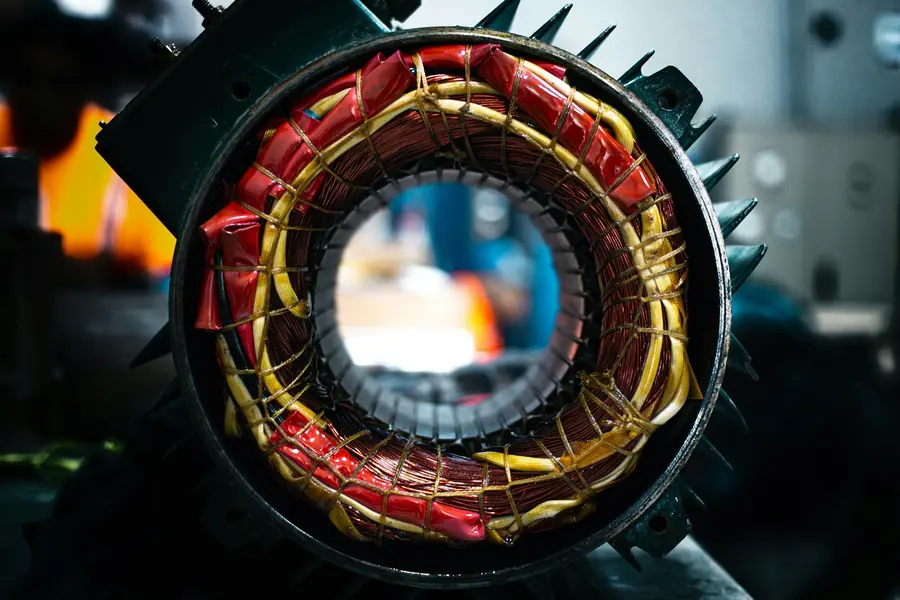
Too much grease fills the housing. The rolling elements start churning and pushing the grease mass on every revolution, internal friction rises and the bearing runs hot. With heat, the grease bleeds oil faster, oxidizes and hardens, and the end result is the same as with too little: poor lubrication. Electric motors have an added risk: the excess can be pushed into the motor and reach the windings.
The typical sign is bearing temperature climbing right after relubrication and coming down slowly as the grease settles or is purged through the seal.
How much grease
Bearing manufacturers use a simple formula for the relubrication quantity applied from the side of the bearing:
Quantity (g) = 0.005 × D × B
where D is the outside diameter and B is the bearing width, both in millimeters. A 6310 bearing, with a 110 mm outside diameter and 27 mm width, calls for about 15 g per relubrication. It is a starting point, not a rule: the bearing manufacturer's catalog and the machine manual take precedence.
How often
The relubrication interval gets shorter as any of these variables goes up:
- speed, because the grease works harder;
- bearing size, for the same reason;
- operating temperature, which speeds up grease oxidation: by the manufacturers' rule of thumb, every 15 °C above 70 °C cuts the interval in half;
- contamination by dust and moisture;
- vibration and shock loads.
Manufacturers publish charts that start from speed and diameter and apply correction factors for these conditions. What no chart knows is the actual condition of that particular bearing in your plant.
The right dose shows up in the data
This is where monitoring closes the loop. With a vibration and temperature sensor on the bearing housing:
- high-frequency vibration that rises and returns to normal after relubrication means the bearing was short of lubricant;
- temperature rising right after relubrication means too much;
- no change at all means the interval can possibly be extended.
Relubricating based on condition, not just on the calendar, is predictive maintenance applied to the cheapest task in the plant.
Small, frequent doses
Splitting the quantity into smaller, more frequent doses keeps the film in place without packing the housing. That is what an automatic lubricator does better than a manual route: the same amount per month, in many doses instead of one.
Where IoTData fits in
The wireless vibration sensor measures triaxial vibration and temperature at the bearing, and our in-house automatic lubricator logs every dose and the reservoir level. On the same dashboard, you can see the dose and its effect. See automatic lubrication and the vibration sensor.
Sources: relubrication recommendations from bearing manufacturers (quantity 0.005 × D × B from the side; shorter interval at temperatures above 70 °C); ISO 15243 (Rolling bearings — Damage and failures — Terms, characteristics and causes); literature on bearing vibration analysis (high-frequency signals under insufficient lubrication).