
Cathodic protection: what it is, how it works and how to monitor it
Galvanic or impressed current, the −850 mV criterion, what a test point is, why IR drop is misleading, and what remote reading changes for pipeline integrity.
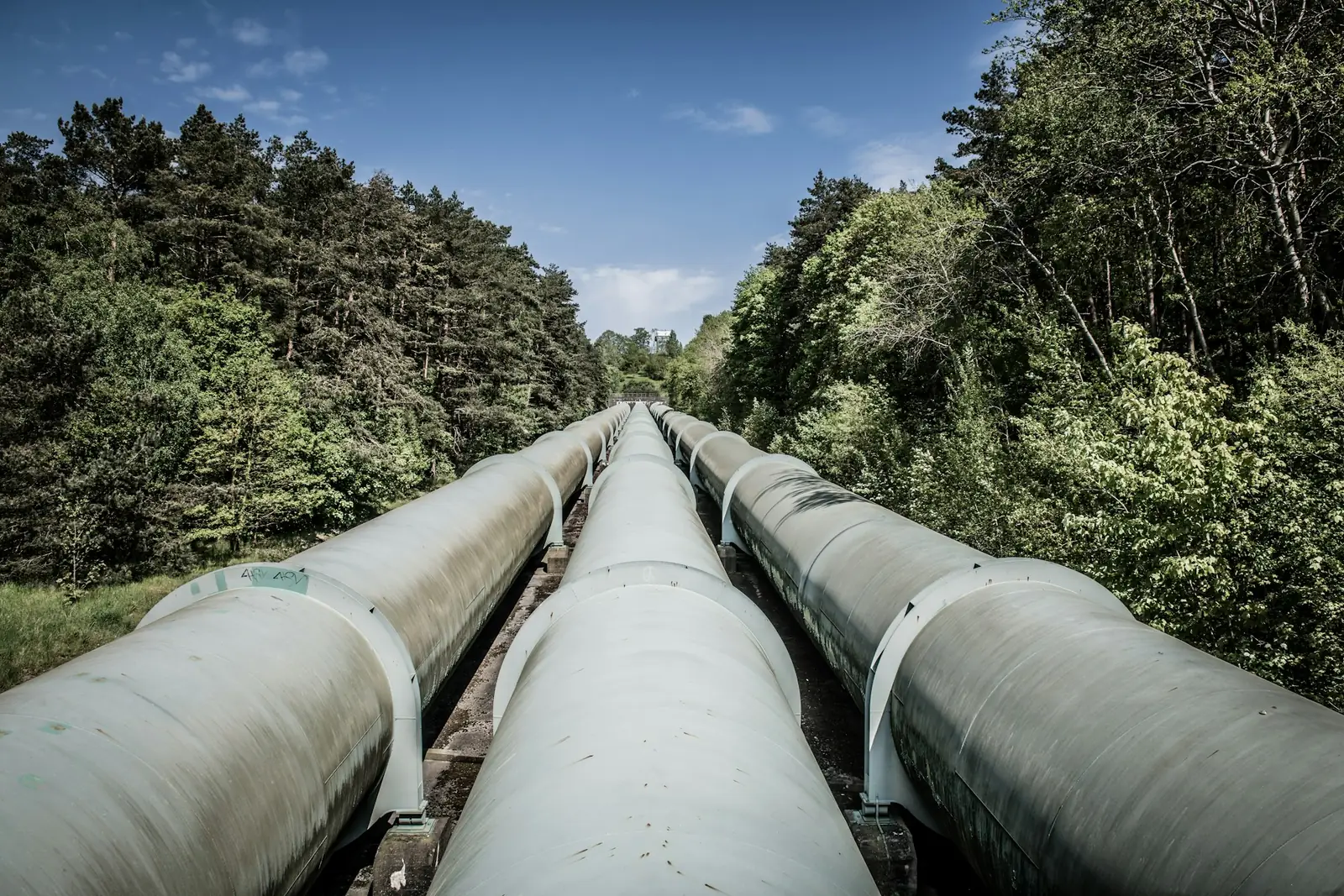
Buried steel corrodes. Moist soil acts as an electrolyte, and potential differences along the pipeline create areas that lose metal. Cathodic protection does the opposite: it injects a small direct current that turns the entire pipe surface into the pole that receives current, the cathode, where corrosion practically stops. It is what keeps gas pipelines, water mains, underground tanks and port structures standing, always together with a good coating.
The two systems
Galvanic anode. Blocks of a metal more active than steel, such as magnesium, zinc or aluminum, connected to the pipeline. They are consumed instead of the pipe and need no power supply. They work well for small structures, structures with good coating, or soil with low resistivity.
Impressed current. A rectifier connected to the power grid converts alternating current to direct current and injects it into a groundbed of anodes. It protects long stretches and can be adjusted to demand. The trade-off is reliance on power and on a piece of equipment that can stop.
How you know the pipe is protected
By measuring the pipe-to-soil potential: the voltage difference between the pipe and a copper/copper sulfate reference electrode placed on the soil above the pipeline. The classic criterion, adopted in ISO 15589-1 for on-land pipelines, is a potential equal to or more negative than −850 mV against that electrode. Less negative than that, protection is insufficient; too negative, and excess current can disbond the coating and embrittle more susceptible steels.
The test point
The pipeline is buried, and to measure you need a way to reach it. The test point is a box in the ground or a post along the right-of-way, with cables welded to the pipe. The technician connects a high-impedance voltmeter to that cable and to the reference electrode and reads the potential. A pipeline has dozens or hundreds of test points along its route.
The IR drop trap
With the rectifier on, the reading includes a component that is not protection: the voltage drop caused by the current itself flowing through the soil, known as IR drop. It makes the pipe look better protected than it really is. The classic way to eliminate it is the on/off measurement: interrupt the rectifier briefly and read the potential right after switch-off. With several rectifiers on the same section, the interruption has to be synchronized, and that is where GNSS timing comes in.
The most common failures
- Rectifier down due to a power outage, a blown fuse, a diode destroyed by a surge, or vandalism.
- Anode depleted or cable broken: current drops and voltage rises.
- Coating damaged by third-party works, which increases the current required.
- Interference from other structures, such as electrified railways, transmission lines or another protected pipeline.
They all share the same problem: nobody sees them. Corrosion makes no noise, and survey crews only come by every so often.
What remote reading changes
- Rectifiers read several times a day: voltage, current and input power. If one stops, you know within minutes.
- Critical test points read daily: a potential trend instead of one reading per survey.
- History with the time of every reading, for the integrity plan and for audits.
Field surveys are still necessary; they now go where the data points them.
Where IoTData fits in
The network already exists: cellular where there are towers, and the DG satellite network, which delivers in minutes, where the pipeline runs far from them. The cathodic protection monitor, for rectifiers and test points, is under development and will be piloted with the first customer. See cathodic protection.
Sources: ISO 15589-1 (Petroleum, petrochemical and natural gas industries — Cathodic protection of pipeline systems — Part 1: On-land pipelines).